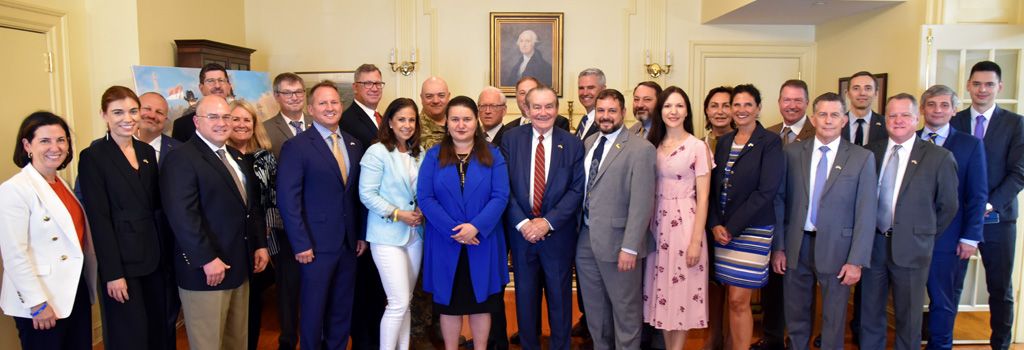
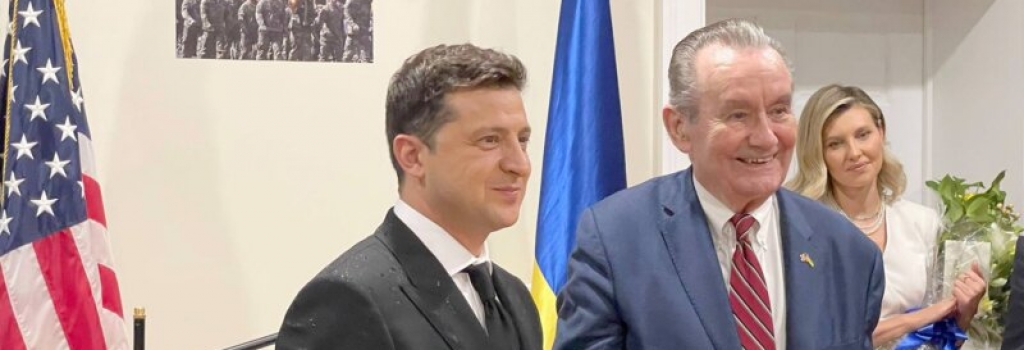

Featured Galleries CLICK HERE to View the Video Presentation of the Opening of the "Holodomor Through the Eyes of Ukrainian Artists" Exhibition in Wash, D.C. Nov-Dec 2021
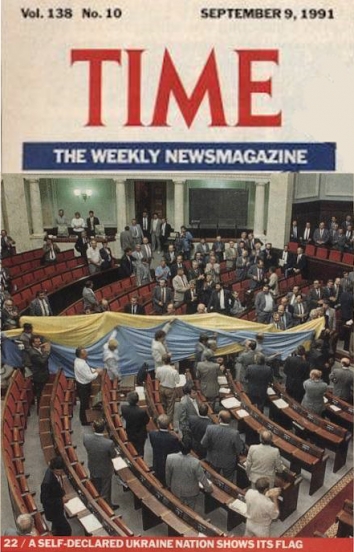
 USUBC COLLECTION OF OVER 160 UKRAINE HISTORIC NEWS PHOTOGRAPHS 1918-1997
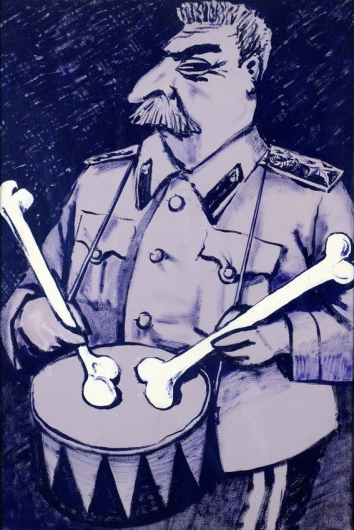
 "HOLODOMOR 1932-33: THROUGH THE EYES OF UKRAINIAN ARTISTS" - COLLECTION OF POSTERS AND PAINTINGS
 USUBC COLLECTION OF HISTORIC PHOTOGRAPHS ABOUT LIFE AND CAREER OF IGOR SIKORSKY PHOTOGRAPHS - INVENTOR OF THE HELICOPTER
 Ten USUBC Historic Full Page Ads in the Kyiv Post





UKRAINE- RISKS ARE RISING
 Analysis & Commentary: By Timothy Ash
RBSMarketplace, Local Markets Strategy | LM Alert | CEEMEA
The Royal Bank of Scotland, London, UK, Monday, September 7, 2009
UKRAINE- RISKS ARE RISING
Analysis & Commentary: By Timothy Ash
RBSMarketplace, Local Markets Strategy | LM Alert | CEEMEA
The Royal Bank of Scotland, London, UK, Monday, September 7, 2009
LONDON- I have maintained a reasonably constructive view on Ukrainian sovereign debt over the past year a reflection of a number of factors:
[1] (+) On a risk/reward basis spreads (5Y CDS is still currently at 1,100bps) offered value, or rather at least investors were being paid for the risk, relative to its peers;
[2] (+) The sovereign credit matrix still appeared favourable, with a relatively lowly public sector debt/GDP ratio - still under 30% of GDP as of the end of July, despite more than US$10bn in disbursements this year from the IMF. Note though the rapid deterioration in this ratio from only around 10% of GDP one year earlier - itself partly a reflection of borrowing from the IMF, plus the costs of banking sector bail-outs.
[3] (+) Sovereign external debt service falling due was still relatively light, with US$2-3bn in sovereign external liabilities falling due over the year versus official FX reserves of US$28bn currently. Note that after a peak in sovereign debt amortisations in August/September 2009, market sovereign debt redemptions are then very light through to 2011, and appeared well funded via likely multilateral/bilateral funding sources.
[4] (+) Concerns over the country's external financing burden have been eased through a combination of:
a) a marked narrowing in the current account deficit (from ~7% of GDP in 2008, to a likely out-turn for the full year in 2009 of ~ 2% of GDP, which could well be fully covered from net FDI), as the economy deflated import demand collapsed (down 60% YOY) and more than offsetting the drop in export revenues from lower global steel prices/demand;
b) some restructuring of private sector external liabilities at the margin;
c) foreign banks willingness to roll external liabilities falling due/recapitalise their Ukrainian subsidiaries;
d) the provision of a US$16.4bn IMF stand-by arrangement, US$10bn of which has been disbursed to date and with what appears to be relatively light interpretation of conditionality by the Fund;
e) some (excluding IMF disbursements, the NBU has actually sold around US$20bn in foreign exchange over the past year) draw down of the NBU's FX reserves, and
f) a move to a more flexible exchange rate arrangement, with the weaker currency (the UAH has lost 50% of its value over the past year) helping to support the current account position.
[5] (+) The energy price agreement reached with Russia in January provided a more market-based solution to energy pricing, with a move to market pricing for energy by 2010. While this suggests higher average import prices for gas than the US$179.5 per 1,000 cu metres paid in 2008, Ukraine has drastically cut gas consumption - itself a reflection of the on-going recession which has seen real GDP decline by ~ 20% this year.
Ukraine's gas import requirement has thus fallen from an average of over 50bn cu metres to more like 30 billion cu metres at present (consumption stands at around 50 bcm, and this has produced overall net savings in terms of its annual gas import bill (probably around US$1bn). Ukraine also appears set to benefit from a hike in gas transit fees from Russia for 2010, with discussion of a hike from US$1.70 per 1,000 cu metres over 100km to around US$2.60.
The downside is that with gas consumption in Europe dropping dramatically through the current crisis, actual volumes of gas transit are currently running at 50-60% of year earlier levels, so net-net gas transit fees will probably end up flat over the year. The good news also is that Ukraine does appear to have been keeping to the contract agreed with Russia in January, meeting the schedule of making monthly payments for gas supplied; payable by the 7th of each month.
Russia's willingness both to raise the gas transit fee, and also to agree to allow Ukraine to import lower levels of gas than have been currently contracted (Ukraine had been contracted to purchase 42 billion cu metres of gas as per the January agreement, but likely now only needs to import 28 - 33 billion cu metres annually).
Reports also suggest that Ukraine has bought around 25 billion cu metres into storage this year, which should be sufficient to ensure gas deliveries to Europe this winter; politics aside, from a technical perspective there does not appear to be reason for a repeat of last year's disruption in gas supplies to Europe.
[6] (+) More broadly, and perhaps this is reflected in better relations over gas, the Tymoshenko administration appears to enjoy much better relations with Moscow than have some of its predecessors.
[7] (+) While the problems in Ukraine's banking sector have been well documented, the sector is still small relative to the size of the economy, and hence the bail-out costs still remain manageable from a public finance perspective. With 50% of the sector now foreign-owned, and given foreign banks' willingness to recapitalise their local operations, the actual cost of bailing out the sector is expected to be much less (perhaps two thirds) than the UAH44bn (4-5% of GDP) initially programmed.
This is not under-estimating the problems still facing the sector which faces NPLs likely in the range of 20-25%+, and which has seen the erosion of its deposit base and access to market financing significantly curtailed. Clearly the sector is unlikely to be an engine for growth/recovery for some years yet.
[8] (+) Presidential elections due in January at least offered the chance that the current three-way logjam between President Yushchenko, PM Tymoshenko and the main opposition party, Regions of Ukraine, would be broken. I had assumed that with President Yushchenko being unlikely to win a second term, Tymoshenko and Regions would be forced to co-habitate, and that this could usher in a more stable form of government.
SERIOUS DETERIORATION IN THE POLICY ENVIRONMENT
Marked weakening in the value of the UAH
All the above said, we note a serious deterioration in the policy environment in recent weeks, and this has been reflected in a marked weakening in the value of the UAH.
[1] (-) First, at the end of July the Ukrainian government announced its intention to try and restructure the external liabilities of the state-owned gas company, Naftogaz. With the company's sole outstanding Eurobond due for redemption at the end of September, the timing of the move was hardly optimal.
Finalising a restructuring over such a short space of time, during the summer vacation period will be very challenging. The clear danger is that the process will drag on beyond September, and then become something of a hostage to the electoral process in Ukraine; presidential elections are due to be held in January 2010.
The prospect of the government being at loggerheads with foreign investors in the run up to that poll will surely create a potential electoral gift for the opposition. The assumption, meanwhile, that any such restructuring will have limited impact on the sovereign's credit worthiness, is surely misplaced.
Formally S&P has indicated that a default by Naftogaz would not lead to the cross default to the sovereign, as the company while state-owned does not formally benefit from a sovereign guarantee. While technically this might be true, in reality successive Ukrainian governments have assured investors that the Ukrainian state stands fully behind the company.
PM Tymoshenko even announced her intention to provide a sovereign guarantee to the company in December 2007, with financial provision for the guarantee provided in the 2008 budget. In the event a formal sovereign guarantee was never extended.
However, by now stepping back from verbal assurances given in the past, the government will suffer some considerable reputational damage. It is now also questionable as to whether market funding for gas purchase/supply will be forthcoming in the near future, and gas supply will hence be dependent on government/official financing.
Why would any foreign investor want to finance gas transit given the recent experience? Meanwhile, the price perhaps of a restructuring agreement for Naftogaz will be the extension of a formal sovereign guarantee to any restructured assets, which will then add to the formal leverage of the sovereign.
[2] (-) Second, the administration appears to have gone back on commitments made to the IMF during the second review under the Stand-by arrangement. In particular, the government seems to be stalling on its commitment to raise domestic gas prices paid by households by 20% (key for Naftogaz) as of September 1, and for municipalities from October.
PM Tymoshenko, perhaps with an eye on presidential elections, has indicated that the price hike will not go ahead, albeit note that it is the national price regulation committee (NERC) which seems to be stalling giving approval to the price hike. Subsequently trade unions were successful in getting an injunction against gas price hikes, even though NERC had assured the IMF that trade unions had no such power to stall energy price hikes.
[3] (-) Third, given that energy price deregulation remains a key pillar of the SBA with the IMF, it seems incomprehensible that the IMF could continue to disburse credits under the existing agreement without progress from the government in this respect. It will in any event be difficult for the IMF to disburse the next credit tranche (expected in October/November) in such close proximity to presidential elections.
Our base line scenario remains no further IMF disbursements prior to the presidential elections in January, with the Fund likely returning in February/March to reconstitute a revised programme with the new government.
Certainly, members of Tymoshenko's own party have not helped in terms of the relationship with the IMF, with Ivan Kirilenko, the head of BYuT in parliament, noting that the only reason why the IMF continues to disburse credits, despite Ukraine's failure to meet most of the conditions attached to the loan, is the personal standing of the prime minister. He also reconfirmed that the government has no intention of raising domestic gas prices in 2009.
However, with the sovereign debt service peak in September/October having been negotiated, and with evidence of more stability in terms of energy storage/supply (particularly to Europe), we think the IMF will likely be more willing to play hardball with Ukraine in Q4. Failure to do so surely would undermine the IMF's own standing.
[4] (-) Fourth relations between Ukraine's various executive organs of power remains strained. Tensions between the MOF and the NBU have been a recurrent theme of the past few years; partly a reflection of the fact that the NBU is seen as within the sphere of influence of President Yushchenko, while the MOF is controlled by supporters of the prime minister.
However, a new dimension herein emerged over the past week with President Yushchenko directly criticising the NBU (and indeed the government) over the management of the exchange rate, raising concern that the president would try and force through management changes at the NBU.
While the existing NBU management has its critics, it is unclear whether changing the management of the bank at the height still of the crisis, and in the face of renewed pressure on the exchange rate, would be wise.
IN CONCLUSION
In conclusion balancing the risks against the credit positives noted above, we would advise scaling out of Ukrainian positions. And, even despite the weakening in the currency over recent week, we think it is quite likely that the UAH will see a renewed bout of significant weakening in the run up to the presidential elections, possibly even hitting double digits against the US$.
The trigger for this would likely be a messy/prolonged restructuring process for the external liabilities of Naftogaz, emerging tensions in the relationship with the IMF, alongside heightened political risk in the run up to the presidential elections.
----------------------------------------------------------------------------------------
LINK: http://strategy.rbsm.com/strategy/Home/Public.aspx
NOTE: This material is for information only. It is not an offering document and its terms are qualified in their entirety by the final transaction documents in respect of the securities described therein. Certain transactions mentioned may give rise to substantial risks and may not be suitable for all investors. RBS may have positions, deal or make markets in these securities or related derivatives. Prices are based on current information, are subject to change, are not offers to transact and cannot be relied upon as representations that transactions can be effected at such prices. This material is based on information considered to be reliable, but we do not represent its accuracy or completeness.